
Promoting inclusion and mental well-being | Promouvoir l’inclusion et le mieux-être mental

Let’s Dance

Let’s Dance


This blog contains eight videos showcasing different variations of dance, including wheelchair dance, deaf dance, a video about a disabled dance company, and more. They epitomize the theme that is being presented here. Some are short; others are long. I hope you enjoy the videos.

The evolution of dance goes back to approximately 1.5 million years ago when Homo erectus (the ancestor of later human species) - after a long day of hunting and food gathering - broke out in movements to celebrate their day’s work. These movements were regarded as dancing. Dance styles have changed through history but dance itself remains one of the most expressive physical art forms. According to Dr. H.T. Van Schie, dancing supports the notion of bonding between individuals. It creates a sense of connection.

Dancing has effects on the brain. It triggers dopamine in the pleasure centre of the brain, and it creates happiness!

Watch: “Why Do People Dance to Music”

Besides being a fun activity, dancing plays an important role in learning, memory and navigating in space. It increases self-confidence, creativity, social skills and self-expression. It promotes a sense of well-being and happiness. On August 28, 1963, Martin Luther King Jr. gave his famous “I Have a Dream” speech. It resonated around the world on many levels. The following three videos emulate the concept of having a dream. It is worth noting how the benefits of dancing, mentioned above, are played out in the videos.

“The Latkovski sisters on the 2013 WHAS Crusade for Children”

“Ballet Dancer With Cerebral Palsy is an Inspiration”

“Woman designs harness to help girl with disability dance”

The last video shows the use of a mobility aid that allowed a person with a disability to dance. There are other aids that play an important role in assisting the disabled to engage in sport dancing, which is a type of competitive dancing that will be discussed later in this blog.

Dance crutches are a specific type of forearm or elbow crutch, designed ergonomically with lightweight and durable materials to facilitate movement and artistic expression. They feature rotating, removable arm cuffs, allowing for a wider range of motion and often have features like highly stable tips designed for the demands of performing on various surfaces.

Many of the more serious dancers have extremely customized wheelchairs that are designed to facilitate easier movement for dancing. The chairs are lighter in weight than average, with a sports chair base and a low back with as close to a 90-degree angle as possible. The chairs do not have brakes and would not be very comfortable or proper for everyday use but make moving gracefully much easier for disabled dancers.
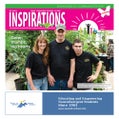
Many disabled dancers and choreographers founded companies to:

  • break down negative stereotypes and show that disabled people are not defined by the inability to do anything but are capable of creating extraordinary movement and art.
  •  challenge ableism and create opportunities for inclusive dance, expand the art form's vocabulary beyond traditional norms and gain artistic control over their work and careers. These pioneers wanted to offer equal access to professional dance training and performance for disabled individuals, present their unique experiences through dance and showcase the strength and beauty found in diverse bodies and movement.
  • open doors for people with disabilities who wanted to pursue dance professionally on an equal basis with non-disabled peers.
  • move away from viewing disabled artists as a niche or "tick-box" exercise towards a cultural shift where their work is recognized and integrated into the mainstream dance industry as valuable, artistic contributions.
  • celebrate the abilities of disabled dancers, viewing differences as additive and inspiring new approaches to choreography that expand the overall art form.
  •  create meaningful performances that directly include people with disabilities, rather than collaborating with them only to meet inclusion quotas. 

Wheelchair dancing includes several styles, categorized by the partnership and dance type. Major categories are Standard Dance (waltz, tango, foxtrot), Latin Dance (samba, cha-cha, rumba), and Freestyle Dance (a broad category encompassing hip-hop, ballet, and contemporary). The way dancers partner also defines the type: Single Dance (one wheelchair user or one disabled dancer), Duo Dance (two wheelchair users), and Combi Dance (one wheelchair user dancing with a standing partner).

The following video is of a single dancer. The video itself is long but amazing.

Musa Motha: The First Group Golden Buzzer Winner! Britain’s Got Talent

The following video is of a Duo Dance – two wheelchair dancers performing a Latin dance in a competition. The video itself is long.

Duo Latin Class 2 final - 2013 IPC Wheelchair Dance Sport Continents Cup

The next video presented in this blog shows a Combi Dance—one wheelchair user dancing with a standing partner.

“Gravity” Wheelchair Dance by Marisa Hamamoto & Piotr Iwanicki

Canada has very few dance companies in comparison to European countries and the United States. Stopgap Dance Company, located in the United Kingdom, is made up of deaf, visually impaired, neurodiverse, and disabled dancers. In contrast, there are many inclusive dance companies throughout the United States. Here are three popular examples:

  1. The Rollettes are a Los Angeles–based wheelchair dance team whose mission is to empower women with disabilities through dance and community. The team performs globally to demonstrate that dance is for everyone, regardless of mobility. They also host an annual Rollettes Experience, a women’s empowerment weekend for individuals with disabilities.
    “Rollettes” wheelchair dance team promotes inclusion and community

  2. Dark Room Ballet is a free online ballet class for adults who are visually impaired. The class is taught by Krishna Washburn, a blind dancer based in New York City, and includes students from around the world. Students rely on detailed verbal descriptions of movement and tactile tools, such as a strip of tape on the floor, to orient themselves in space.
  3. The Blind Dance Company (BDC) is a non-profit organization based in the Greater Los Angeles Area that empowers visually impaired individuals through dance. The company provides professional instruction and performance opportunities for blind and visually impaired dancers.
    The Blind Dance Company
    Website

In Canada, companies supporting dancers with disabilities include Propeller Dance in Ottawa and Wheel Dance in the Greater Toronto Area. Propeller Dance creates innovative works through collaboration among dancers with diverse abilities and offers training and outreach programs. Wheel Dance is a federally incorporated non-profit that provides subsidized wheelchair ballroom and Latin dance classes and serves as the organizing body for Wheelchair DanceSport Canada, an International Paralympic Committee Championship Sport.

Wheel Dance hosts an annual Para DanceSport Competition in Canada, which has been held since 2016 and attracts participants from Canada, Mexico, and the United States. The organization also participated in the first-ever Canadian Wheelchair DanceSport Competition in 2016 at the Ontario Open Championships and has been involved in performances such as the Pan Am Path celebration in 2015.

While people have been dancing for centuries, inclusive dancing has a relatively short history. Hilde Holger pioneered inclusive dance in the late 1960s by working with her son, who has Down syndrome, and founded the Amici Dance Theatre Company. Located in London, England, this company includes dancers with physical and mental disabilities as well as non-disabled dancers.

Para DanceSport was also formalized in Sweden around the same time, beginning in 1968 as a recreational and rehabilitative activity that led to the first competition in 1975.

Canada remains in the infancy stage regarding inclusive dancing at the international level. Wheel Dance hopes to one day compete internationally with countries such as Sweden, France, and the Netherlands.

There are about five dance studios in the Montreal area where individuals with special needs can attend dance classes:

National Centre for Dance Therapy (NCDT)

Les Grands Ballets Canadiens de Montréal

📍 1435 De Bleury, Suite 500, Montreal, QC H3A 2H7

📞 514-849-8681

✉️ dansetherapie@grandsballets.com

🌐 National Centre for Dance Therapy

Classes offered:

  • Creative Dance – Autism (ages 4–8)
  • Ballet – Autism (ages 9–17)
  • Creative Dance – Down Syndrome & Intellectual Disabilities (6+)
  • Street Dance – Physical or motor disabilities / mild intellectual disabilities (ages 15–30)

Instructor: Luca “Lazylegz” Patuelli

L'Académie de Danse de Montréal

📍 8265 Boulevard Langelier, Saint-Léonard, QC H1P 2B8

📞 514-323-9997

✉️ info@academiedansemontreal.com

🌐 Adap-ta-Danse Program

An inclusive dance program for youth aged 12–18 with physical or intellectual disabilities. Designed for autonomous and motivated dancers who can follow group instructions.

Corpuscule Danse

📍 5350 Lafond Street, Rosemont—La Petite-Patrie, Montréal, QC H1X 2X2

🌐 corpusculedanse.com

✉️ infos@corpusculedanse.com

Language: French

Integrated dance classes and workshops for children, teenagers, and adults with or without disabilities, including reduced mobility or mild to moderate intellectual disabilities.

Funky Feet Dance Company

📍 2115 Saint Régis Blvd, Dollard-des-Ormeaux, QC H9B 2M9

📞 514-568-4350

🌐 thestudiobyfunkyfeet.ca

Dance classes for children and teens.

Studio J

📍 16950 Hymus Blvd, Kirkland, QC H9H 3W7

📞 514-835-5227

✉️ studiojdance.co@gmail.com | info@shevaya.com

🌐 Facebook Page

Dance programs designed for individuals with special needs.

There are several reasons why an individual may not attend any of the classes listed above or a dance studio near them. The following two videos provide insight into these concerns and fears.